
Chimney Sweep & Creosote Removal
Swept when measurement says so — not the calendar.
Learn moreLint is a fuel load sitting in a heated duct. We clear the full run from the dryer connection to the exterior termination, then verify the work with an airflow reading — before and after, both on the report. The inspection side checks what IRC M1502 actually requires: rigid or semi-rigid metal duct, a compliant termination with a working damper, and a run length the dryer can push. Foil transition duct and screened terminations are the two failures we flag most. Longer dry times are usually the first symptom homeowners notice; rising exhaust humidity is the second.
A dryer vent looks like the simplest thing in the house, and that is exactly why most of them are cleaned badly. A leaf-blower jammed into the wall cap, a quick rod-and-run, a "looks clear" at the door — that is the industry standard, and at Chimney Standard we built our reputation by refusing it. We clean dryer vents the way we clean six-figure chimney systems: scoped, measured, documented, and proven. The same crews and the same exacting standard, in metros from the Texas Gulf to the Pacific Northwest.
Here is what compacted lint actually does. It chokes the exhaust, so the dryer runs two and three cycles to finish one load, baking the heating element and shortening the life of an appliance you paid real money for. It traps the moisture that should be leaving the house, so it backs up as humidity into a laundry room and feeds mildew. And — the part nobody likes to say out loud — superheated lint behind a stalled airflow is one of the leading causes of residential fire. The U.S. Fire Administration ties roughly 2,900 home fires a year to clothes dryers, and failure to clean is the number-one factor. Premium isn't a luxury here. It's the margin between a clean run and a claim.
Our process is deliberate. We open the system at both ends, pull the appliance, and run a counter-rotating rotary brush with simultaneous air-whip through the full duct — transition, in-wall run, every elbow, and the exterior or roof termination. A HEPA-filtered vacuum captures the debris instead of blowing it into your living space. Where the run is long, multi-elbow, or roof-terminated, we treat it as the harder job it is rather than pretending the easy method reaches it. Then we measure: an anemometer reading on the exhaust before and after, so the result isn't an opinion, it's a number you keep.
What sets the PCE job apart is the finish. We re-seat the dryer tight to the wall without crushing the transition, replace a kinked foil hose with code-compliant semi-rigid aluminum if we find one, confirm the exterior damper opens fully on airflow and seals when off, and leave the termination guarded against birds and rodents. You get a written airflow certificate and photo documentation of the before/after — the kind of record a discerning homeowner, a property manager, or an insurer actually respects.
This hub also covers the heavier cousins of a standard clean for clients who need them: deep cleaning of packed, long, or roof-run ducts; rooftop dryer vent cleaning from the jack down; lint-trap and blower-housing cleaning inside the dryer cabinet where fine lint bypasses the screen; commercial, laundromat, and multi-unit stacked-riser exhaust cleaning; and emergency same-day clearing of a fully blocked vent throwing no-dry or overheat faults. Whatever the configuration, the standard is identical.
Because PCE is a national brand, you get one craftsmanship benchmark whether you're in Dallas, Denver, or Charlotte — not the luck of the draw on a local subcontractor. We schedule tight windows, arrive in branded vehicles, protect the floors, and clean up completely. The premium isn't in the price tag; it's in the airflow number we hand you and the fact that you don't think about this vent again until the next scheduled service.
Check the full duct run and exterior vent.
Power-brush + vacuum lint from every elbow.
Confirm airflow meets spec at the exterior.
Note any crushed/long runs that need correction.
We've worked on 0+ DFW homes over 15+ years. Every job — small sweep or full rebuild — runs the same way: certified technicians, written quotes, photo reports, warranty in writing.
Full-run cleaning, every elbow to the exterior
Power-brush + vacuum, not just the trap
Airflow verified after cleaning
Faster drying + lower fire risk
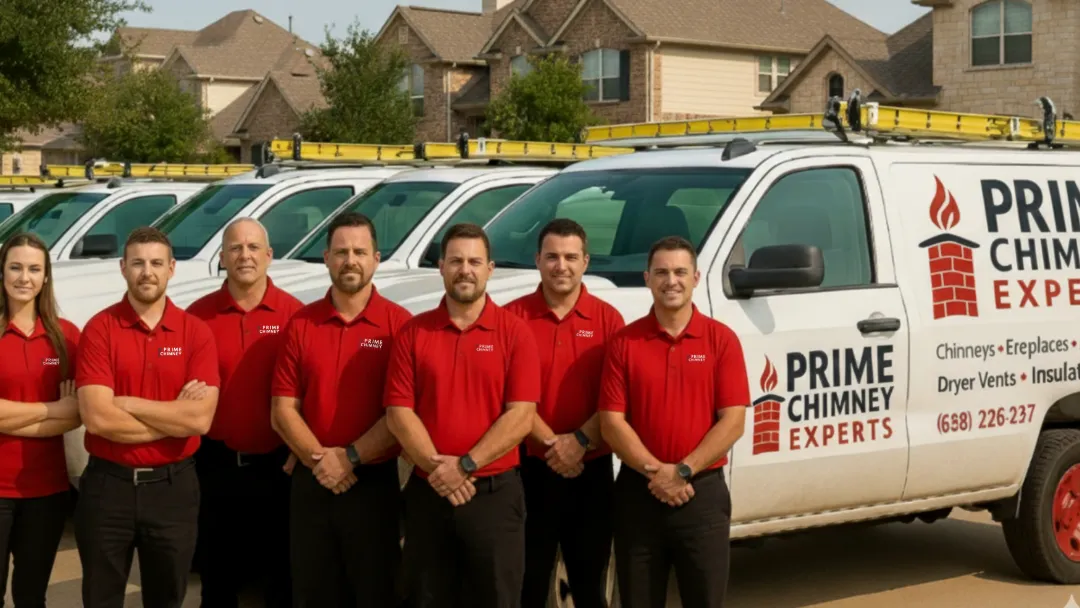
Family-owned, CSIA-certified, NFPA 211–compliant. We're the team you call when you want it done right the first time — no rotating subcontractors, no upsell pressure, no surprises. Same techs, same trucks, same standard.
They're tiers of access, defined in NFPA 211. Level 1 covers readily accessible areas — the routine annual check when nothing has changed. Level 2 adds a camera scan of the flue interior plus attics and crawl spaces, and it's required at property sale, after a fire, or when the appliance or fuel changes. Level 3 involves removing components or finish materials to reach a suspected hidden hazard. Each tier has to be justified by the one below it.
NFPA 211 names the triggers: sale or transfer of the property, after a chimney fire or operating malfunction, after external events like storms or seismic activity, and whenever you change the fuel type or connect a new appliance. If any of those apply, a Level 1 isn't sufficient — the standard wants the flue interior scanned, not just eyeballed from the top and bottom.
A written report, standard turnaround 48 hours. It lists every checkpoint with a pass or fail verdict, a photo behind each finding, the relevant code or standard reference, and — when something fails — what correcting it involves. It's a document you can forward to an insurer, a buyer, or another contractor for a competing bid. Nothing we say on-site counts until it's in the report.
The honest answer is: when measurement says so. NFPA 211 requires annual inspection, but sweeping is triggered by creosote depth — 1/8 inch is the threshold. A fireplace burning most nights all season usually hits that in about a year. Occasional weekend fires might take two or three. We measure at each inspection and only recommend a sweep the measurement supports.
General home inspectors do visual checks from the ground and the firebox — their own standards of practice put chimney flue interiors outside scope. The failures that cost real money, like gapped flue tiles and hidden cracking, only show on a camera scan. That's why NFPA 211 specifies a Level 2 at property transfer. Plenty of chimneys pass; the point is knowing before you close, not after.
Last reviewed:
Other services in the Cleaning & Sweeping category.
Flat fee confirmed when you book. Same-week scheduling. A pass/fail verdict within 48 hours.
Chimney fire, storm hit, active leak, or a flue you're not sure about? We answer 7 AM to midnight and the assessment ends in a written safe-to-use verdict — including a do-not-use notice when the evidence supports one. After-hours dispatch runs subject to crew availability.
Emergency line